Here in Atlantic Canada, we recently experienced Hurricane Fiona. This historically significant hurricane event was even bigger and stronger than previous Hurricane Dorian in 2019, which brought a tree down on my house, and also bigger than Hurricane Juan in 2003, which hit the Atlantic provinces quite hard. There are countless stories of tragic losses of life and homes, some of which were simply swept into the sea. My experience was mild in comparison to those experiences, and my heart goes out to all of those who have suffered losses great and small during this time.
I thought I'd share some pictures and words about the impact Fiona had for me, in particular to remind everybody of how dangerous these storms can be, and how it's important to take the warnings seriously.
On Friday evening, I'd been reading for several days about the potential impact of the strengthening storm and where it was anticipated to make landfall. I knew that New Brunswick was likely to be less severely impacted than Nova Scotia, Prince Edward Island, and Newfoundland & Labrador, but I still knew we were going to be at the mercy of some incredible winds. I did some yard tidying, trying to put things away that might blow around and become projectiles during the storm.
The storm raged all through Friday night and much of Saturday. The winds were absolutely ferocious, and several times during the night I got up to peer out the window into the inky blackness, but I only saw vague tree-shaped blobs waving back and forth. I could tell that they were moving far more than they ever normally would, but otherwise, I couldn't really see much.
The power went out shortly before midnight on Friday. It wasn't restored until 67 hours later, on Monday evening. There are still over 140,000 homes without power in the Atlantic provinces, and I can imagine how frustrated most of those people are at this point. I do not have a generator, but I've never had the power out for more than about 24 hours before, if that, so I've never really needed one. However, I'm thinking it might be time to get a small one for future events. Hurricanes and other extreme weather events are expected to become more frequent and more impactful in future. I am definitely a believer in climate change, and I firmly trust the data that shows such trends.
On Saturday morning, the yard was a bit of a mess. There were small pieces of shredded leaves everywhere, and loads of small branches and twigs littered the ground. But, our street wasn't blocked, which was great!
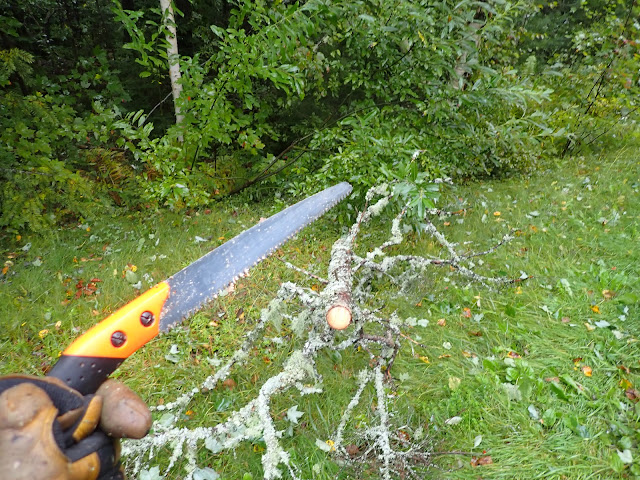
The driveway was blocked, but not by a very major tree.
I was able to address that tree with my small Japanese pull saw which my father gifted to me some years ago. It is very handy saw for all kinds of situations, especially post-hurricane situations!
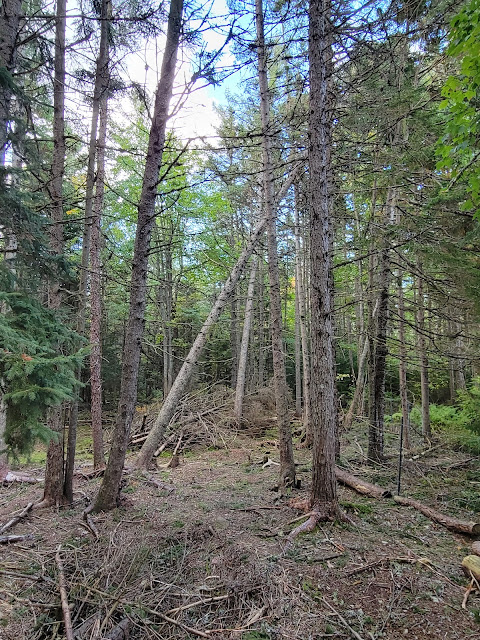
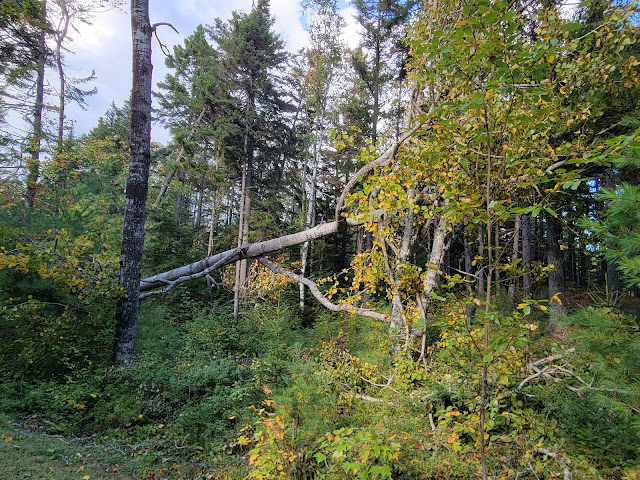
In total, about 15 trees on the property either snapped in half or fell over after being pulled out at the roots. We'd had quite a bit of rain in the week beforehand, and I think the ground was quite saturated in some areas, meaning that the roots would be more easily pulled up. Some trees are leaning at crazy angles and might come down in future storms. If they're deeper into the woods, that's OK, but anything on the edge or near buildings needs to be addressed.
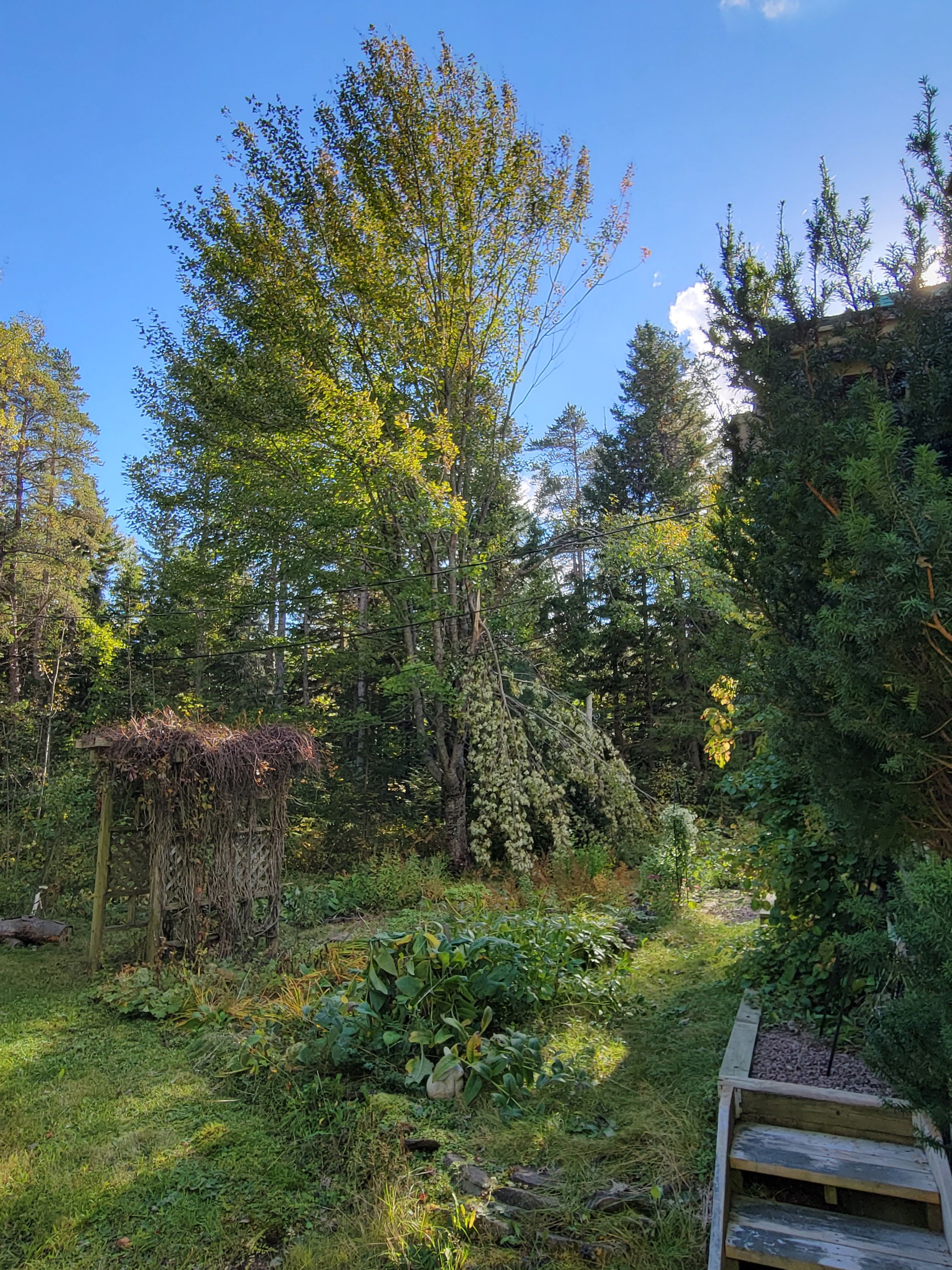
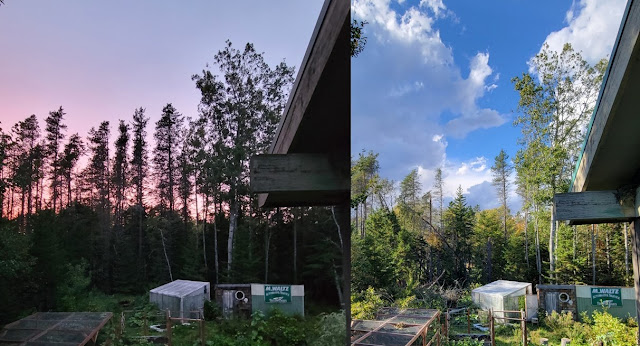
On Friday evening, I took a few shots of the 'normal' skyline view from the little balcony off my bedroom. I thought it would be interesting to compare before-and-after shots in case any trees came down in the hurricane, as they did in Hurricane Dorian 3 years ago. Well, they certainly did come down, even more than expected! You can see in the picture on the right, I have far fewer trees on my skyline view in comparison to the picture on the left from the night before. The tall aspen on the right is still up, but a whole clump of spruce have just snapped or uprooted, making a significant change to the appearance.
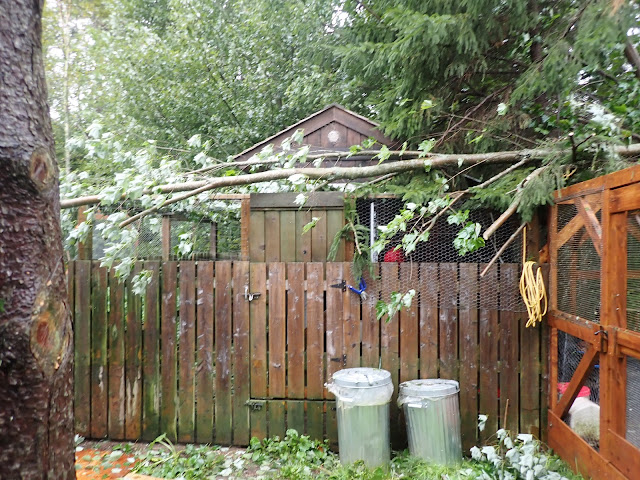
The gate to Twilight and Lucky Nickel's enclosure was completely blocked. You can hardly see the gate in this picture.
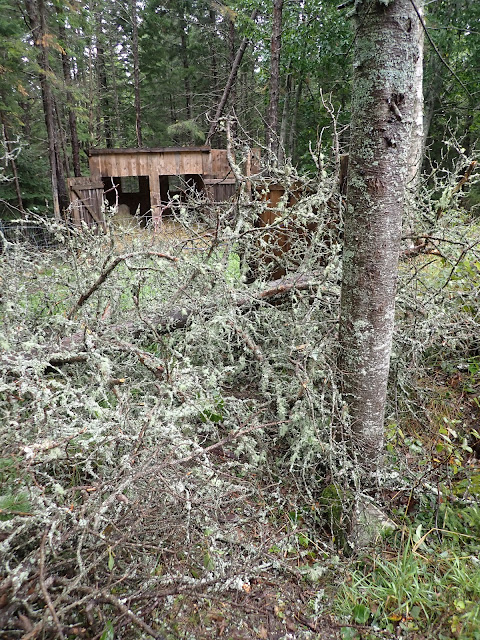
It took time to do some manual sawing and pruning to get past the tree that had fallen across that pathway before I could reach the gate. Marc was able to help me with that task.
Finally, the gate was accessible!
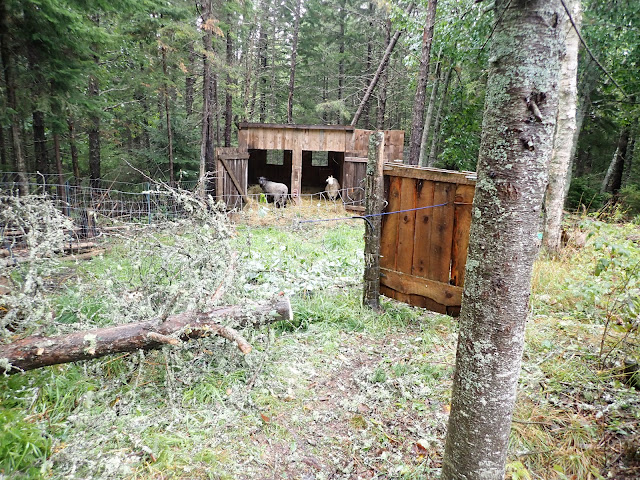
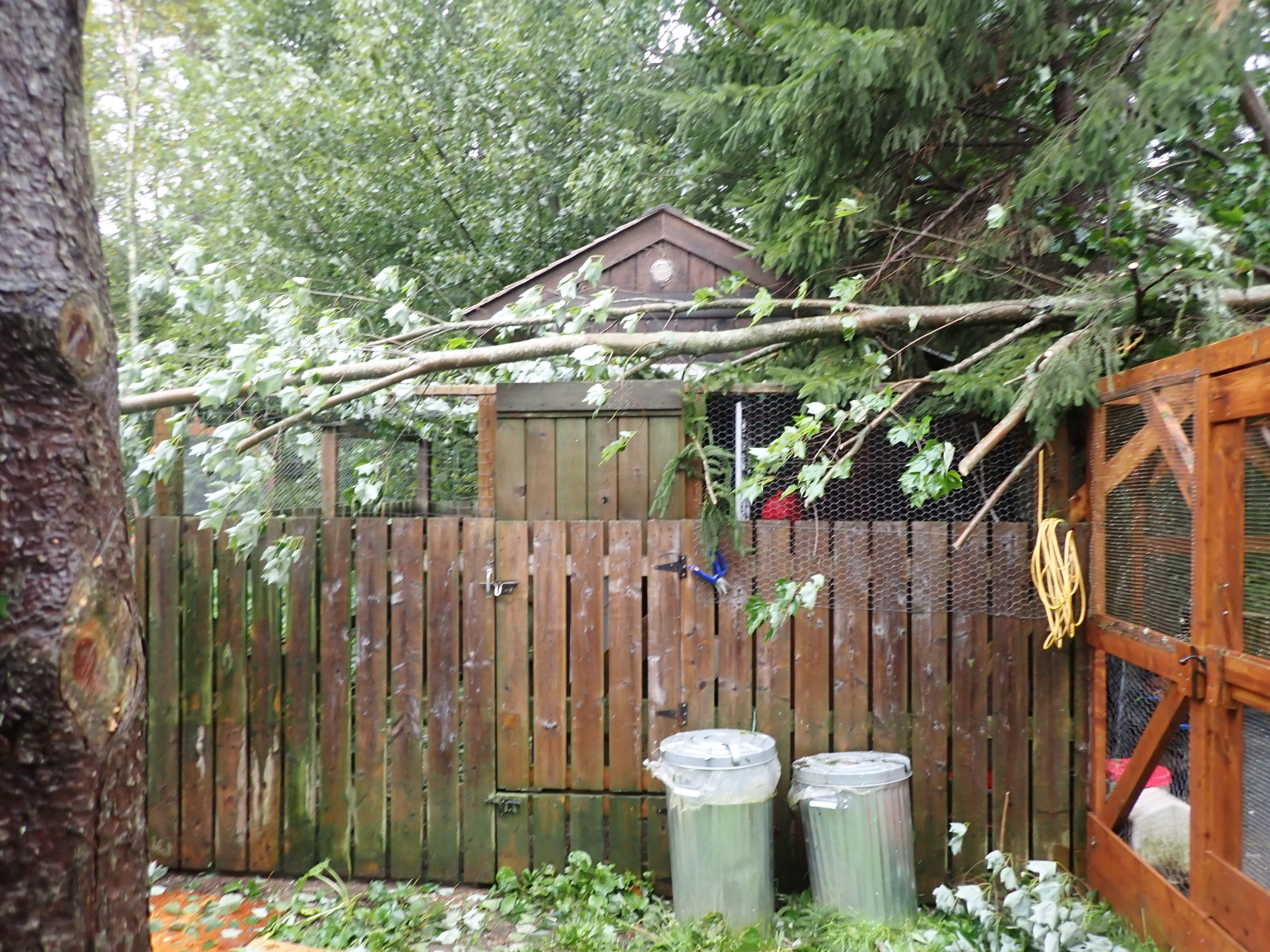
Fortunately, their little barn and the attached chicken coop didn't suffer any damage.
There is a tree in the chicken area that is pulled up and leaning at a crazy angle that I will need to have addressed.
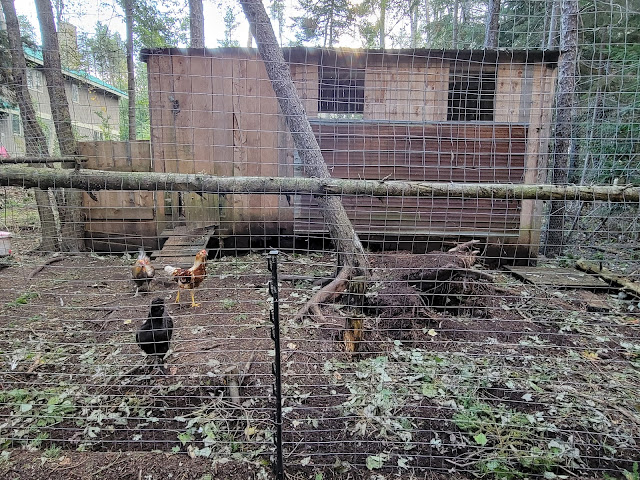
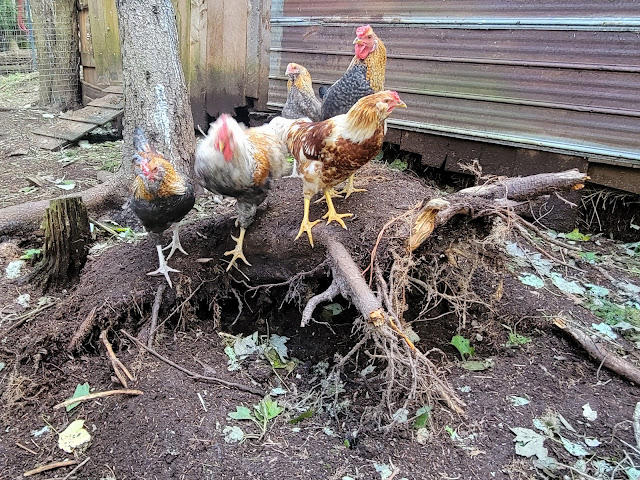
Meanwhile, the chickens enjoy digging around under the roots.
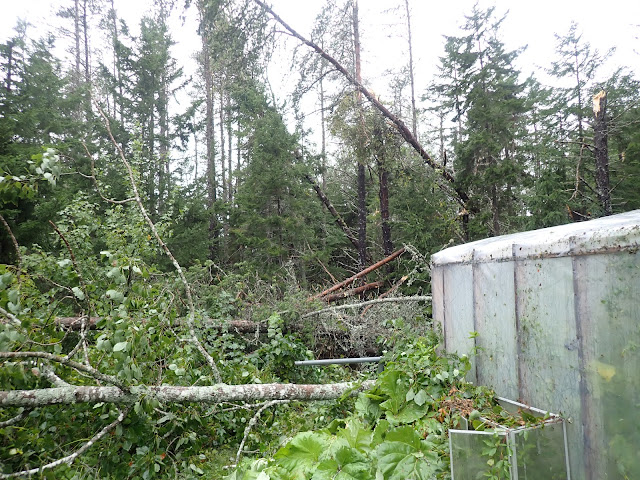
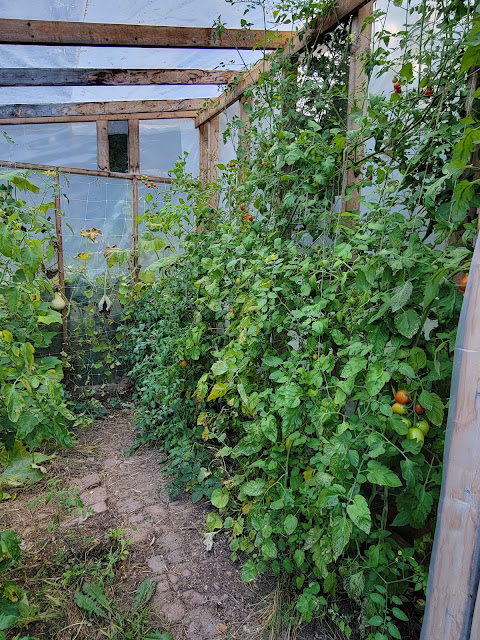
My little greenhouse was, amazingly, spared of any damage, even though trees fell and snapped all around it. I felt very lucky when I saw it undamaged and still standing. It must have just been the wind direction and the way the trees fell that kept it out of harm's way! Right about in the middle of this photo, behind several tree trunks, is my large compost pile. I cannot presently access it, and until I have someone come out with a chain saw for some cleanup, it will remain unaccessible!
There are still tomatoes in progress!
The main chicken coop and chicken run were also undamaged. There were some branches that fell onto the top of the coop, but they were fairly easy to remove.
The maple that was badly damaged in Hurricane Dorian in 2019 was also damaged again. One limb was actually hanging on our power line to the house. We removed that right away, while the power was out, since we would not have risked doing so with the power on. Another broken limb has yet to be removed. I need to have that tree assessed to determine if it should be taken down. With two rounds of damage, it may be a risk for further damage, and if it fell, it could come down on the kitchen.
My variegated willow developed a significant lean, but I have now righted it and supported it with a couple of stakes, which I can remove in the spring when it has re-established some strong roots.
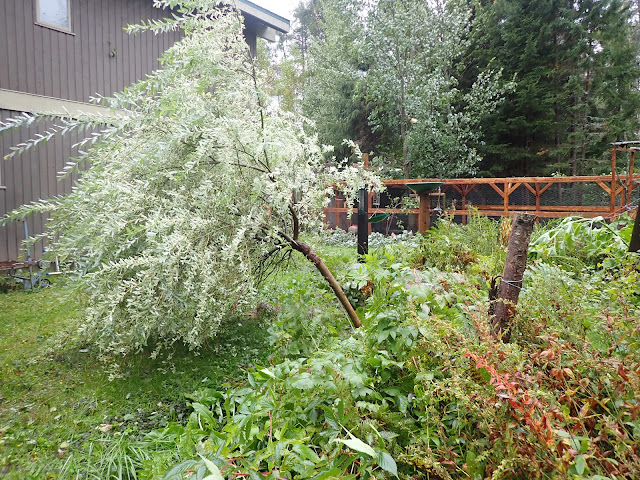
Despite the damage, there is still beauty in the fall garden.



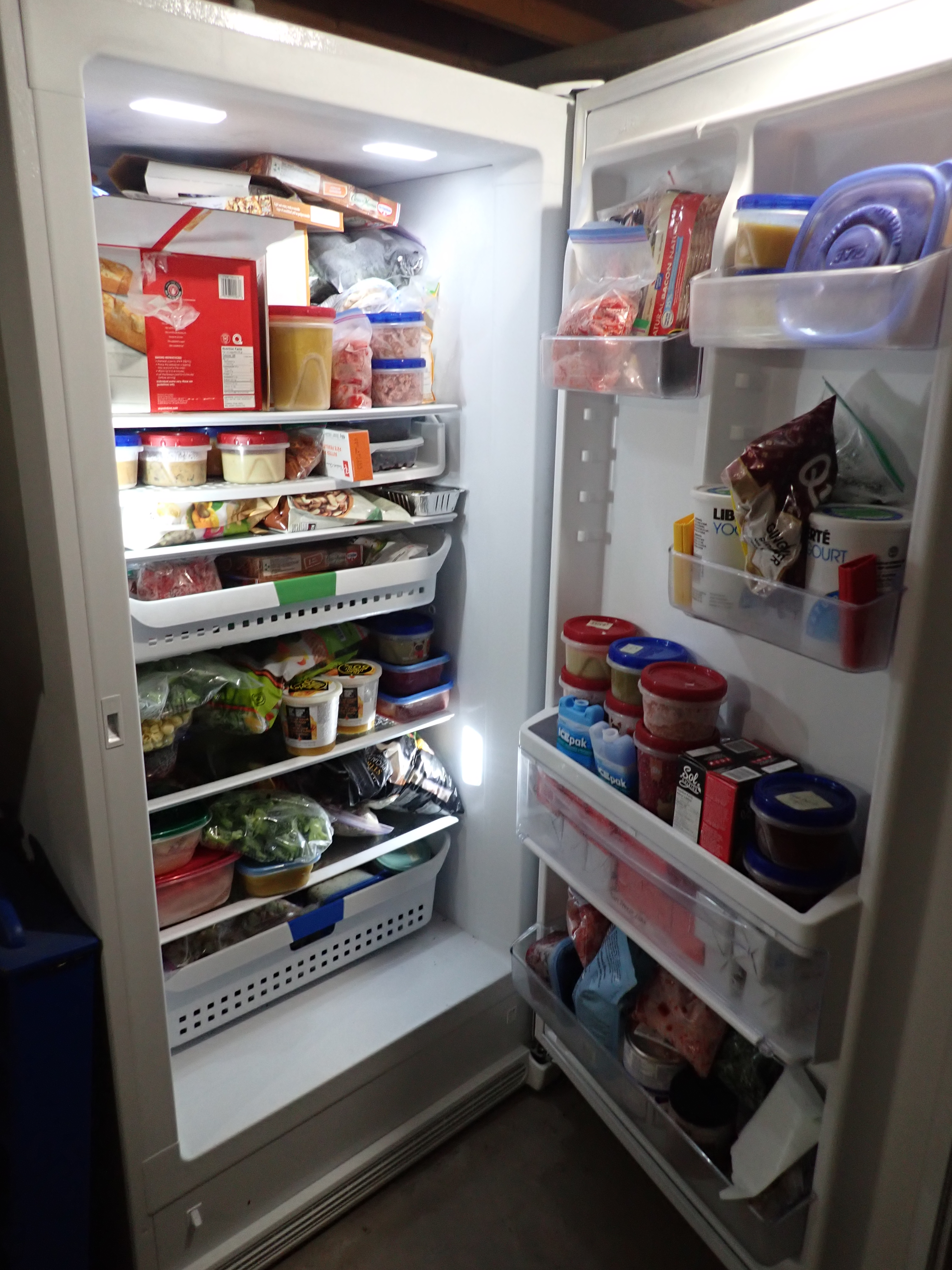
As for indoors, before the hurricane arrived, I used a little freezer power outage tip that I remembered reading about some years ago on Facebook. I filled two small cups with water on Thursday, and froze them. On Friday, I put one cup in the door of each of the two deep freezers (mine are upright models, but you could also do this with chest freezers). On the top of the ice, I put a coin. The idea is that after a prolonged power outage, even if you are asleep or away from home when the power comes back on, you will be able to see how much thawing occurred by the position of the coin in the ice. If it's on top of the ice, all good! If it's at the bottom of the cup, then the ice thawed. If the coin is on top of the ice but the ice is floating in a cup of water, then obviously that's a potential issue as well. This was a good tip, because at the end of 67 hours, both of my coin cups had the coin still on the top of the ice with no melting!
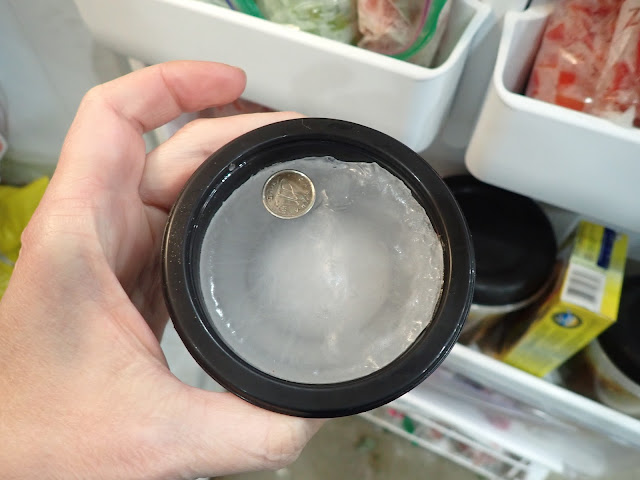
I was amazed at how well the freezers retained their temperature even after such a long time. My normal temperature setting on both freezers is -3 °F. Admittedly one freezer is in the basement where the air temperature is generally cooler, but the other is in the garage. Even the small freezer on the bottom of the kitchen fridge was mostly fine. Everything in all the freezers was still solid/firm except for a couple of bags of chopped red pepper, which I can easily use in a tomato sauce and which are not a dangerous risk like thawed meats. Even those pepper pieces were not fully thawed - just softened. One of my freezers has a display that showed that the temperature inside got to 17 °F (-8 °C) after 67 hours without power. I thought that was interesting because the majority of online sources I consulted said that a full freezer would hold a "safe temperature" for approximately 48 hours. They also say that food can be safely refrozen if it "still contains ice crystals or is at 40 °F or below." Given that after that length of time, it only rose to 17 °F, it would have taken some time to reach 40 °F. Perhaps the fact that they are both fairly modern freezers maintained in good condition is also a factor. In general though, I was tremendously relieved that I had no food losses. I also think that one must use some common sense with regard to the published guidelines. Maybe a full freezer that is in warm temperatures will only keep things frozen for 48 hours, but my experience showed that even one at moderate temperatures kept things fully frozen for much longer than that.


All things considered, my hurricane experience was pretty mild compared to that of many people in the Atlantic provinces, and my heart goes out to those who are still struggling with no power, family members killed or hurt, lost and damaged homes, vehicles, barns, pets, livestock and spoiled food. It is a very difficult time for many and will take a long time for recovery. Meanwhile, I've learned some tricks for next time and will consider purchasing a generator and perhaps chain saw as well.